Kolkata's E-Went plans sodium-ion scooter trials from December, but says the economics are still to be tested
Saraogi E-Ventures, which sells E-Went electric two-wheelers, will test sodium-ion scooters around December. Its CEO says the sub-₹1 lakh segment is underserved, and that no new-launch decision has been made on the battery.
Key facts
- Saraogi E-Ventures, the Kolkata company behind the E-Went brand, plans to begin trials of sodium-ion battery scooters around December, deploying some vehicles for testing, CEO Umang Kumar Saraogi told PTI.
- He said the economics and convenience must be evaluated before the battery is used in new launches, and that most E-Went models use lithium-ion today.
- The company says monthly sales have grown from about 100 units four years ago to 1,000–1,100, and it targets ₹65 crore revenue this year.
E-Went, an electric two-wheeler brand from Kolkata, plans to start trials of sodium-ion battery scooters around December. Founder and CEO Umang Kumar Saraogi of Saraogi E-Ventures told PTI that the company expects to put some vehicles with the batteries on the road for testing, in a report carried by The Hindu BusinessLine and ETAuto. It is a trial, not a product launch.
The sodium-ion trial
Saraogi said sodium-ion batteries are being explored as an alternative to lithium-ion because they are supposed to be safer. He also said their lower energy density makes the battery packs bulkier. “The economics and convenience have to be evaluated before we can deploy them in our new product launches,” he told PTI. He added that most of E-Went’s current models use lithium-ion batteries.
The report says that, if sodium-ion is commercialised successfully, it could help India’s push to make its own batteries by using abundant domestic raw materials and reducing reliance on imported lithium-ion components. That is PTI’s framing, not a claim by E-Went.
The reports do not give the number of scooters in the trial, the battery capacity or range, a model name, or a price. They do not say the trial scooters will cost under ₹1 lakh.
Targeting the sub-₹1 lakh segment
Separately from the battery, Saraogi said regional makers have considerable room to grow in the sub-₹1 lakh segment and in smaller towns, because national brands largely focus on premium models. “For someone earning ₹30,000–50,000 a month, a high-priced electric scooter is often beyond their consideration,” he said. He described buyers wanting a reliable, value-for-money scooter within a ₹1 lakh budget, with minimal maintenance costs.
The report adds that regional players can build their businesses through local dealer networks, lower ownership costs and word of mouth rather than expensive branding.
Growth plans and numbers
According to Saraogi, E-Went’s monthly sales have grown from about 100 electric two-wheelers four years ago to 1,000–1,100 now, largely through word of mouth. Saraogi E-Ventures’ revenue crossed ₹50 crore in FY26 and it is targeting ₹65 crore in the current financial year. He said the company aims to be profitable by 2028. These are the company’s own figures, as given to PTI.
E-Went does not plan to expand nationally. It will instead deepen its presence in the states where it already operates: West Bengal, Jharkhand, Bihar, Chhattisgarh, Odisha, Assam, Telangana and Andhra Pradesh. “We don’t plan to go national,” Saraogi said.
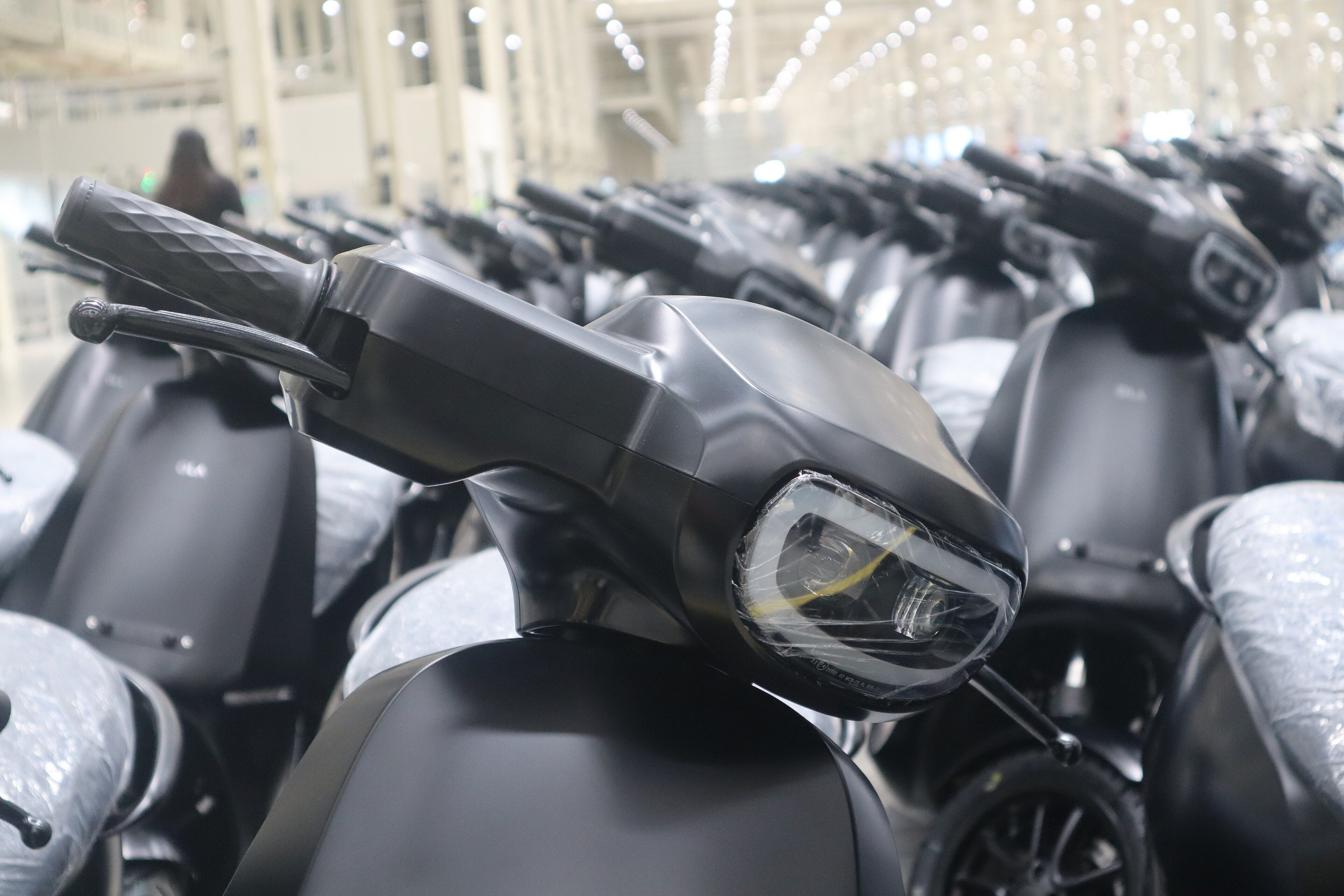
Charged Times compiled this report from PTI’s interview as published by The Hindu BusinessLine and ETAuto. The two versions are the same PTI story. We have not independently verified E-Went’s sales or revenue figures. The cover photo shows scooters from another brand and is representative only.
Frequently asked questions
When will E-Went test sodium-ion scooters?
Around December, according to founder and CEO Umang Kumar Saraogi, who told PTI the company expects to deploy some vehicles with the batteries for trials.
Will E-Went launch a sodium-ion scooter under ₹1 lakh?
Not announced. The CEO said the company sees growth in the sub-₹1 lakh segment, but that the economics and convenience of sodium-ion batteries must be evaluated before they are used in new product launches.
Why test sodium-ion batteries?
Saraogi said sodium-ion is supposed to be safer than lithium-ion, but its lower energy density makes the packs bulkier.
Sources
- The Hindu BusinessLine (PTI): EV brand E-Went eyes mass market, to test sodium-ion batteries from December (22 Nov 2026) (thehindubusinessline.com)
- ETAuto (PTI): E-Went eyes growth in sub-₹1 lakh EV market, plans sodium-ion battery trials in December (22 Nov 2026) (auto.economictimes.indiatimes.com)
Related stories
Ather says demand is near 60,000 scooters a month, and the entry-level Konarc SR1 will wait for its new plant
Ather Energy's Hosur factory is running close to full, so the cheapest Konarc variant, the SR1, will now come by Q4 FY27 once AURIC capacity is online. SIAM data puts the Rizta at about 57% of Ather's October sales.
Electric cars under ₹15 lakh in India: prices and claimed range compared
From the Tata Tiago EV at ₹6.99 lakh to the entry versions of the Nexon EV and MG Windsor, here is what an EV budget of up to ₹15 lakh buys in November 2026.
Mahindra Last Mile Mobility eyes an IPO in about 18 months, with no date fixed
Chairman Rajesh Jejurikar told PTI the electric three-wheeler maker, valued at around USD 1 billion, wants to list in about 18 months to fund new products and capacity. The timeline is broad and no date is final.